Dynamics as Structure, Not Triggers
Most dynamics tools still revolve around a single decision point. One threshold, one behaviour. You can add multiband processing, sidechains and clever timing, but the underlying idea rarely changes. The signal crosses a line and something reacts.
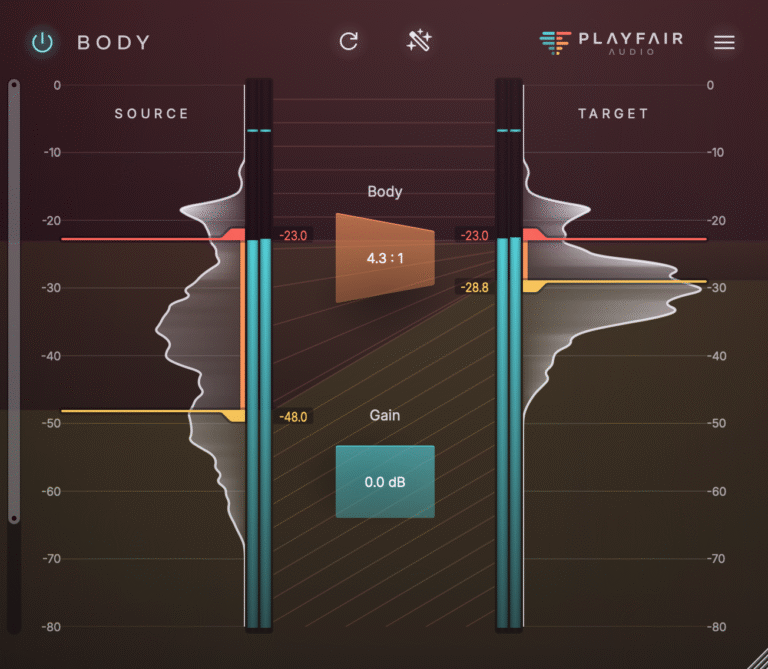
Dynamic Grading takes a different approach. Instead of treating level as a trigger, it treats it as a structure. Punch, Body and Floor are handled as distinct regions, each with its own behaviour. That shift matters, because it allows you to shape how a sound behaves over time, not just how loud it gets.
And the region most tools ignore is the floor.
Where the Mix Quietly Falls Apart
The floor is where accumulated energy lives. Room tone, reverb tails, modulation and low-level movement between events. It’s also where mixes often lose definition, because traditional dynamics either pull this material up unintentionally or suppress it indiscriminately.
Driving audio from the floor means making a conscious decision about that low-level behaviour. You’re no longer treating it as collateral. You’re shaping it deliberately.
Vocal Control Without Flattening Performance
Take a vocal that already sits well dynamically but starts to feel cloudy as the arrangement fills out. Compressing harder risks flattening phrasing, and EQ often just shifts the problem around.
Floor control doesn’t target the vocal itself. It controls the low-level build-up around it, reverb, room energy and sustained information that accumulates beneath the performance. By reducing how much that material rises and hangs on between phrases, the vocal feels clearer in context without touching the expressive parts of the take.
The result isn’t a more controlled vocal. It’s a mix where the vocal occupies its space more consistently, because the quiet information underneath it is being managed intentionally.
Drums That Stay Punchy Without Spreading Everywhere
Consider drums in a dense mix. The punch is right, the body has weight, but the kit feels like it’s filling too much space over time. That’s usually reverb and room energy accumulating beneath the hits.
By working the floor, you can effectively de-reverb the drums. Instead of gating tails or clamping down with heavy compression, floor control lets you reduce low-level room and sustain information while leaving the attack and core tone untouched. It’s a fast and powerful way to rein in reverb because you’re targeting where it actually lives.
The result is a kit that stays forward and controlled without sounding artificially dry. This is especially effective on overheads, room mics and parallel drum buses, where traditional dynamics often feel like blunt instruments.
Ambience and Texture Without Automation Overload
Floor control becomes even more useful with ambience-heavy material. Pads, sound design beds and cinematic textures. Rather than riding automation or stacking processors, shaping the floor lets you decide whether low-level movement supports the cue or slowly overwhelms it.
Lift the floor slightly and the sound feels denser and closer. Pull it back and space opens up, without changing the headline level or killing movement.
Reverb That Stays Present Without Competing
Reverb returns are another place where floor control shines. Instead of aggressive ducking or gated tails, you can calm the low-level wash while keeping early reflections and body intact.
The space remains audible, but it stops competing with the foreground. It’s less about suppression and more about behaviour.
From Correction to Intentional Behaviour
What changes when you work this way is how you think about dynamics. You stop asking how much compression something needs and start asking what the quiet parts should be doing.
Should they carry energy forward or get out of the way? Should they feel alive or controlled? Those are mix decisions, not corrective ones.
Traditional dynamics collapse these questions into a single move. Floor-driven control separates them. Once you get used to that, dynamics stops being about smoothing audio and starts being about managing density, space and time.
That’s the real value of driving audio from the floor. It’s not a trick or a safety net. It’s a way of working that rewards intention, reduces clean-up later, and gives you control where it actually matters.
Download the demo and find out why more people are choosing Dynamic Grading