Immersive mixing tends to expose dynamics problems that are easier to hide in stereo. Moves that feel controlled and musical in a two-channel mix can behave very differently once material is distributed across a multichannel field.
A percussion bus that felt tight can start to feel smeared. Sustained elements can build up in ways that reduce clarity. Transients that once gave definition may no longer carry the same sense of direction or impact. As a result, many engineers find themselves thinking less about simple peak control and more about how different layers of energy interact across the soundstage.
Punch, Body and Floor Across The Bus
Traditional multiband processing divides material by frequency, which is useful when tonal balance is the problem. Immersive mixes often have a different problem: the relationship between transient attack, sustained energy, and low-level ambience. Think of a cinematic percussion bus in Atmos. The transients give you direction and localisation. The sustained energy provides weight and physical presence. The noise floor and tail content create the sense of space around everything else.
Compress it all together and you lose clarity. Expand the wrong elements and the mix starts to feel disjointed, spatially undefined. What’s needed is the ability to treat these intensity regions as separate parameters, to shape how the signal behaves over time rather than simply adjusting its tonal balance.
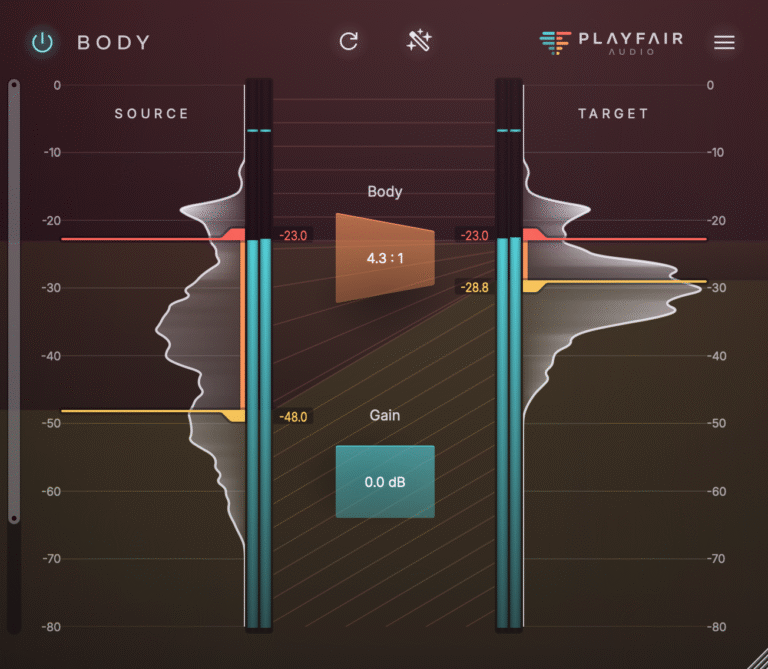
This is the approach taken by Dynamic Grading, which works on intensity regions rather than frequency bands. The practical advantage on a multichannel bus is that you can control density without sacrificing impact, and manage ambience without washing over the front stage. It’s closer to sculpting physical behaviour than applying traditional dynamics processing.
Visual Decision Making Matters
Immersive sessions carry real cognitive weight. More channels, more routing, more simultaneous information to track. Anything that reduces the mental overhead of monitoring that information is a genuine workflow improvement.
Dynamic Grading uses visual feedback to show how dynamics are being redistributed across intensity regions, so rather than adjusting a threshold and listening for the consequence, you can see the relationship between punch, body and floor as it changes. That shortens the feedback loop considerably.
The approach has been referenced in Gert Keunen’s new book on immersive music production, ‘STEREO – WAS A NICE TRY’, which notes that the visual approach makes it intuitive and that it can work extremely well on multichannel busses. It’s a brief mention, but a telling one given the book’s focus on practical workflow.
Maintaining Impact In Immersive Music
Consider a hybrid music cue built around layered percussion, synth pulses and orchestral hits. In stereo, you’d likely lean on bus compression to glue those elements together. In immersive, that same compression can blur spatial definition and reduce perceived scale, which is precisely the opposite of what the format is supposed to offer.
By shaping the sustained energy independently from the transient layer, you can tighten the mix without collapsing its sense of movement. A slight expansion of the punch region restores clarity and direction. Careful management of the floor prevents ambience from bleeding into the front stage. The result isn’t necessarily louder. It simply feels more intentional, more controlled, more physically credible in the space it’s meant to occupy.
Managing Energy As A Distinct Parameter
Impact, weight and space can be treated as separate musical parameters rather than byproducts of level adjustment, and that’s the premise Dynamic Grading is built around. On multichannel busses, where spatial behaviour matters as much as level, that distinction can make the difference between a mix that simply translates and one that genuinely feels immersive.
It’s not a replacement for traditional compression. It’s a different entry point into the same problem.
Try Dynamic Grading
The best way to evaluate it is in your own sessions. We offer a 14-day free trial at playfair-audio.com. You’ll need an iLok account, but no hardware dongle is required.