You finish a mix and something still feels off. The parts are all there, levels are right, the EQ is sitting where it should. But the whole thing sounds like a collection of separate tracks rather than one record. So you add a mix bus compressor and for a second it sounds better, then you listen again and the life has gone out of it.
That trade-off is the glue problem, you get cohesion on one side, energy on the other, a compressor seems to make you choose between them.
What “glue” actually means
Glue is a simple word for a real effect. When a mix is glued, all the elements work together. The kick and bass work as one, and the vocal blends into the track instead of sitting on top. Nothing jumps out or disappears as the song plays.
A mix bus compressor helps create this effect by reacting to the loudest sounds, usually the low end and the snare, and lowering everything together. When the kick hits, the whole mix drops slightly and then comes back up. This shared movement is what makes the mix feel cohesive, as every track responds together.
This technique works and has been used on records for years, but the problem is what you can lose doing this.
Why the energy disappears
Both the glue and the loss of energy come from the same process. The compressor lowers the mix when the loudest sounds hit, and this shared dip creates cohesion. But it also takes away some of the track’s energy.
The reason is that the compressor cannot distinguish between cohesion and impact. When the kick triggers gain reduction, the punch that gives the kick its hit and the body that gives it size both come down together by the same amount because the compressor treats them as a single signal crossing a single threshold. You can set the attack slow to protect the transient, but then the sustain gets squashed. Speed it up to hold the sustain and you lose the punch. You are using the same control to serve two things pulling in opposite directions.
So, the more you try to glue the mix, the more impact you lose. The peaks get lower, the average level rises, the meters look better, but the track sounds smaller. If you go too far, compression stops helping and starts making the mix sound worse. We talk more about this in how compression can ruin a mix.
Getting more glue from less compression
Before you add more bus compression, there are usually ways to fix the problem earlier in the mix.
Begin with the low end, since it usually causes most of the gain reduction. If your kick and bass are clashing, the compressor reacts to both at once. Fix their relationship first, and your bus compressor won’t have to work as hard. We cover how to make drums hit harder in a mix, and the same idea works for the whole low end.
Parallel compression is another useful option. Instead of compressing the whole mix and losing energy, you mix a heavily compressed version under the original signal. The dry track keeps its punch and dynamics, while the compressed track adds thickness and consistency. This way, you get cohesion without losing your peaks, since they remain in the uncompressed track. We discuss more about when this works in the pros and cons of parallel compression.
Both methods follow the same idea: the less your mix bus compressor has to fix, the less energy you lose while making your mix sound ‘glued.’.
The thing a compressor cannot do
Even with a perfectly set mix bus compressor, it still works from one critical point. When the signal crosses the threshold, gain reduction happens, and both punch and body are reduced together. You can limit the downside, but you can’t get rid of the trade-off. This single-threshold problem is also discussed in what your compressor can’t do with floor control.
Dynamic Grading was designed to solve this trade-off. Dynamic Grading is a unique audio processing tool that separates your signal into distinct dynamic ranges, allowing you to target and shape punch, body, and sustain individually.
Unlike traditional compression, which uses a single threshold and applies the same reduction to everything above it, Dynamic Grading gives you precise control over each part of your mix’s dynamics. This means you can add cohesion where needed without losing energy or impact in other parts of the track.
Instead of using a single threshold to lower everything at once, Dynamic Grading treats your signal as a range and lets you adjust different parts separately. The punch and the body of your mix are no longer tied together. You can make the mix more cohesive where it’s needed, while keeping the impact strong. This approach glues the mix by shaping its movement, not just by turning down the loud parts and hoping the energy stays… it rarely does!
Dynamic Grading lets you see your mix’s dynamics, so you know exactly where the energy is, instead of just guessing from a meter. The result is a mix that sounds tight because you shaped its dynamics on purpose, not one that feels flat because a compressor squashed everything for the sake of glue.
You still get that glued-together sound, but you don’t have to lose the punch.
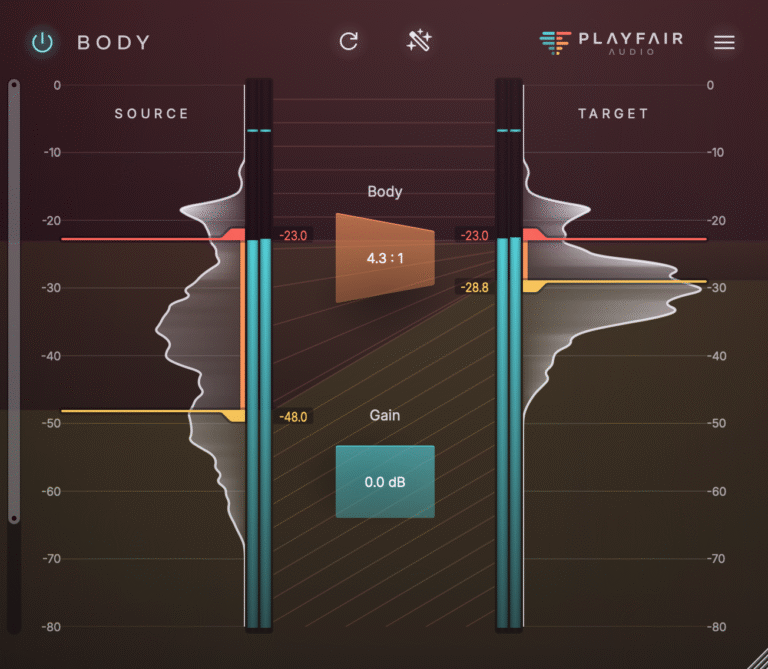
If you want to try this idea first, Body is our free, one-knob version built on the same engine. Use it on a mix that feels flat and hear how controlling the center of the dynamics does what a compressor can’t.
For example, put Body as the last plugin on your mix bus. Turn the knob slowly while listening to a section with drums and vocals. As you increase it, you should notice the elements starting to blend together without losing their punch or excitement. A small adjustment is usually enough to add cohesion. If it starts to feel unfocused or the groove gets weaker, just back it off a little until the mix feels tight and glued.